Logistics
Logistics covers, well, the logistical aspects of Red Alert, from repairs, base building and of course, Robin's favourite, the 'Fighting Square'. As with any of this Guide, these are my own ramblings and will not guarantee you victory, but hopefully turn you into a Commander worthy of applause in the Officer's Mess.
Repair and reinforcing in the field
The key to success of any army group is the constant maintenance and reinforcement of its forces. Whether you're engaging far from or close to your base you need to keep a constant vigil on the status of your units. After a battle is over, quickly pull back units of less than two thirds strength and get them to your repair bays. It's often a good idea to have two repair bays to cope with demand as repairs can be lengthy processes and often you can't afford to have half your strength on rest and refit. For the Allies, mechanics save a lot of money in repairs but at 800 a go, they are vulnerable soldiers and can also be annoyingly inept. One mechanic amongst an army group of tanks will in time repair them all to full strength for no cost but it will be a lengthy process and you'll probably have to interfere to get him to repair them all. Sticking him on guard mode doesn't always work. A combination of mechanics and repair bays is the best bet. Position a mechanic or two around your repair bay and he'll speed the process up and also save you money. Remember, it's not about how many tanks you have, it's about how many full strength tanks you have facing the enemy. Repairing is as important as replacing, and the more you repair your active tanks, the less you need to reinforce the army group. You'll then have the opportunity to set aside fresh divisions for brand new army groups. This again enables rotations (see below) of army groups and mass repairs, or effectively fighting on numerous fronts.
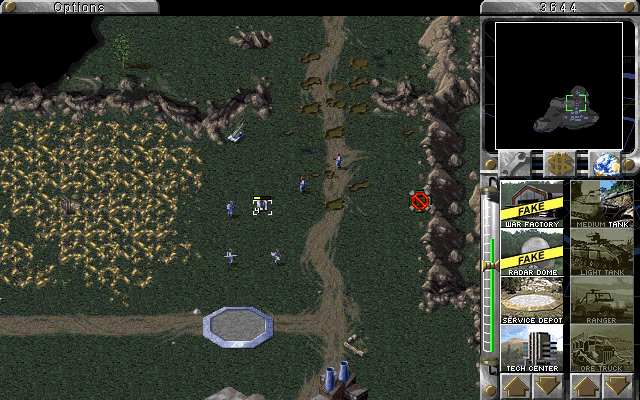
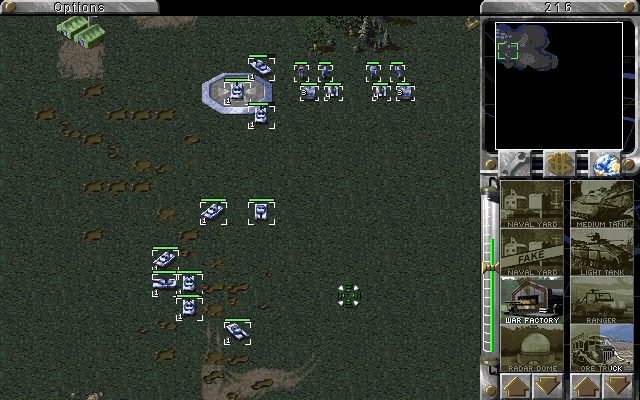
Keep your army groups on a rotation system. Three army groups, each containing about 20-30 units, with two out fighting and one back at base on 'RnR'. They can either be guarding or repairing, and when one outfield group needs pulling back, the base one, now fresh and reinforced, can replace it. It's simple logistics. You need to keep your units at maximum strength. Repairing units costs a fraction of building a new one. The enemy will often target your weakest units, so it's pointless sending them into battle when you can repair them and fight them another day.
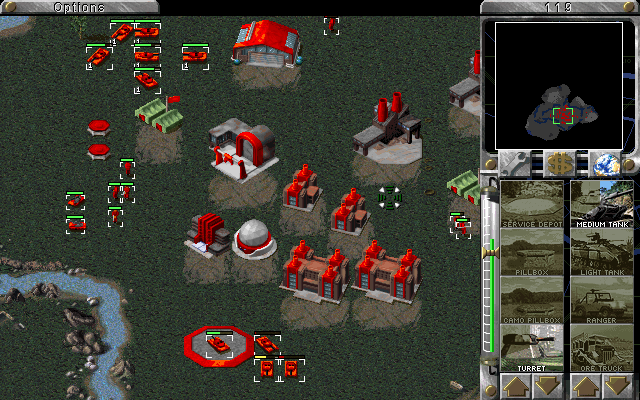
Another good trick with mechanics is to place one outside your ore refineries, because withdrawing your trucks from their service to repair them costs you money in lost ore gathering (as well as the actual repairs), so have them repaired as they work, without having a mechanic running after them. As they come into to drop ore off, the mechanic just has enough time to get one repair cycle in. This is a great method for keeping your trucks up to strength.
Fighting Square
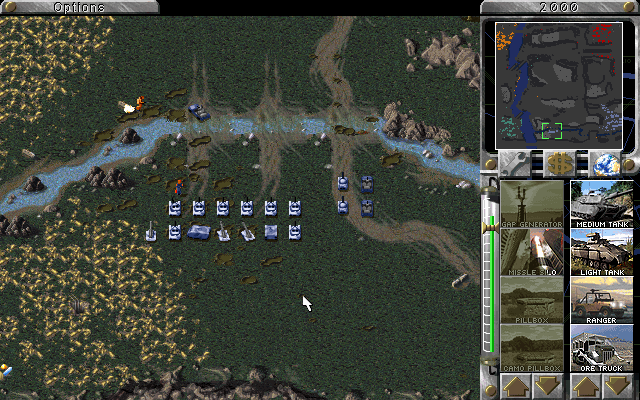
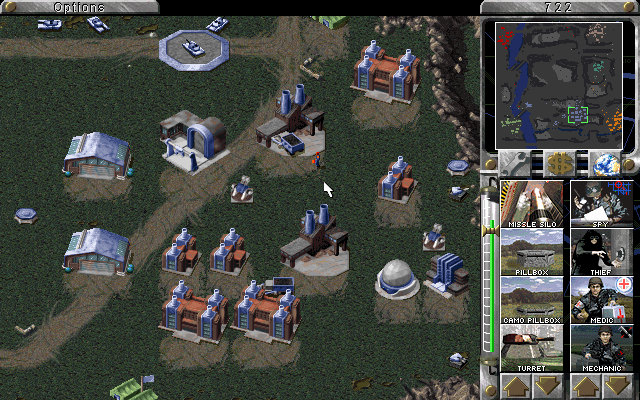
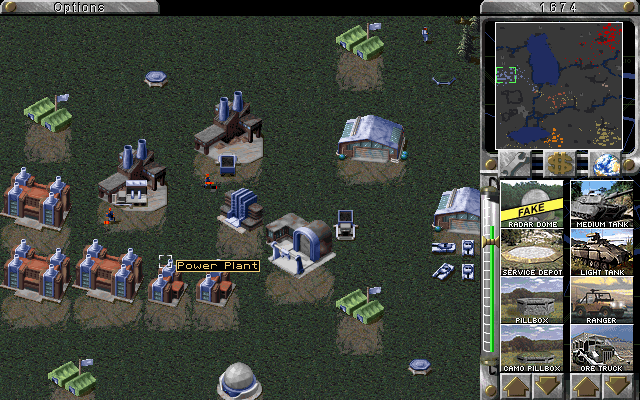
This is perhaps the best way to conduct a fighting defence far from your base. It's also an effective way of slowly advancing a numerically inferior force taking minimal casualties. The basic concept is a square containing mostly tanks, some anti-infantry units, and some maintenance crews (ie, mechanics and medics). Long range units are also a requirement. If organised properly a (self-maintaining) Fighting Sqaure can handle anything the enemy can throw at it. Some screenshots below are good examples.
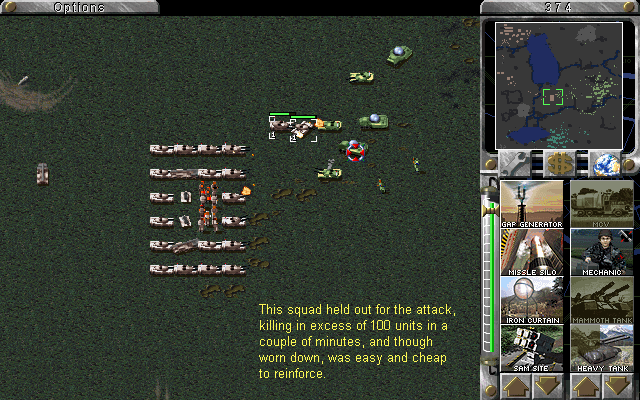
The square system can also be adapted to defend your base or vital points. If you control the area to the rear of the square it basically becomes a line, but maintains all the principles of the self-maintaining square. These are good for keeping routes to your base guarded while your attention is on other theatres of the battlefield. Being safe in the knowledge that your square is dealing with the enemy will help you concentrate on the job in hand.

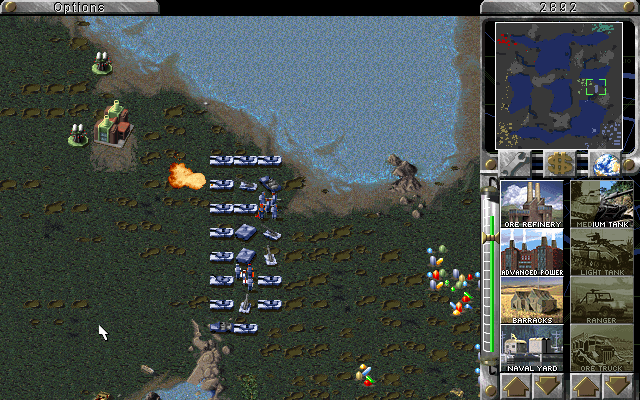
In the Soviet's case, a Fighting Square is different. Unless you capture an Allied barracks, you'll have to rely on the heavier armour of Soviet tanks to keep the squad operating. This is pretty safe assumption, and Tesla Tanks and V2 Rockets offer the Soviets the chance to make really threatening Fighting Squares.
Base building
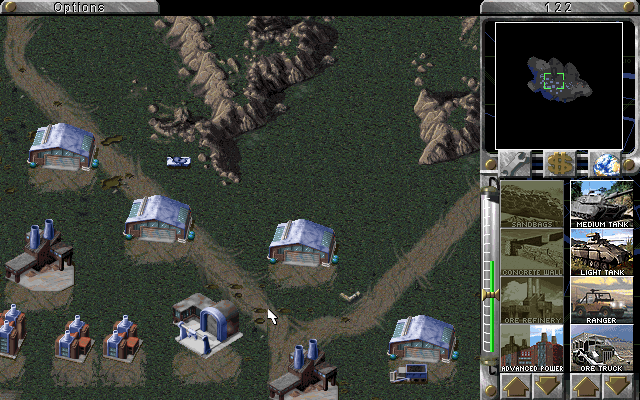
Base building is ultimately going to be the deciding factor between victory or defeat from the very start of your game. Just as you must be aggressive when commanding your armies, you must be aggressive when building your bases. You need to get those tanks rolling as quickly as possible, and have the ore refining ability to do so. You must also ensure your base is a safe haven for your units on rest and refit, that you can perform speedy repairs, move easily around the base and of course, be able to sit back behind some defences and let the concrete take the brunt of the attack. There are so many things to consider when building a base, but there are simple guidelines that should be followed.
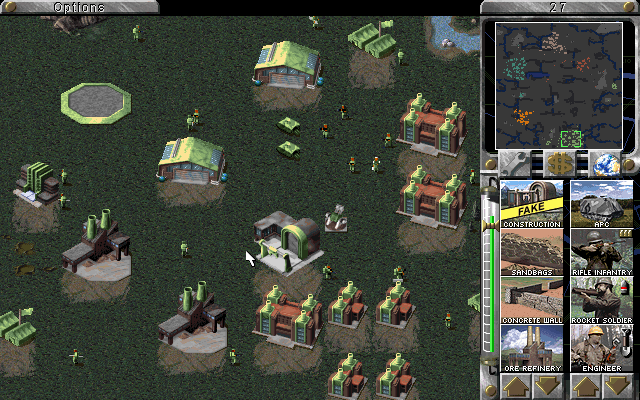
Below I offer some quick fire tips and examples.
- APC Nests: The Armoured Personnel Carrier works great as a mobile machine gun nest before you've had chance to get those pillboxes constructed.
- Combine Defences: Mobile forces and fixed base defences work well together. Notice how the turret helps quickly eradicate an enemy tank.
- Initial Defence: Make the best of your starting units. While the tanks are elsewhere this force is well deployed to handle any light-medium attack until armoured reinforcement can arrive. (Later on this defence force was attacked by a small tank patrol, and held its ground whilst the nearby armoured division hurried to the scene.)
- Garrison: Infantry make very effective fighters once the enemy brings the fight to your base. They're very cheap, and can draw fire from your tanks and structures. Since they're easy, fast and inexpensive to replace this makes a good tactic. Keep your base garrisoned with rifle infantry.
- High Defence: Place base defences on the approach to your base if you can. That way, they can be cutting the enemy down whilst they're still on their way to your base. If some units stop to engage them that means their force becomes split and disorganised. You can see the effectiveness.
- Shuttle Forces: Shuttle your forces about between fronts. Although it is never favourable, you will most likely be fighting on more than one front, and you can't afford to keep your forces totally split. So draw units to the front that will next face attack. Better yet, keep a reserve squad back to 'plug any gaps'. Always have at least a few base defences at each front for the base troops to rally behind and fight from. Three turrets and two pillboxes alone isn't much to stop a full attack, but combined with five medium tanks and two APCs, it's a formidable array of firepower to come up against.
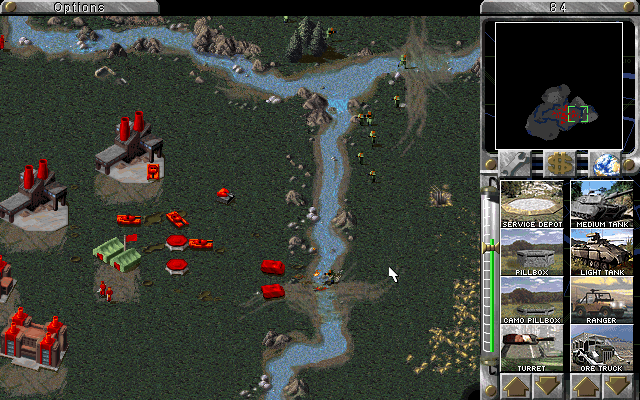
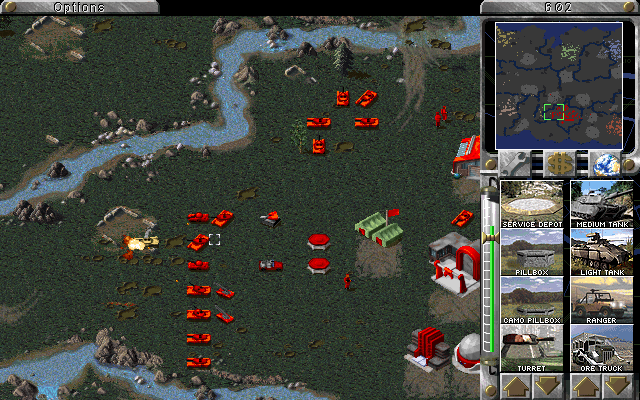


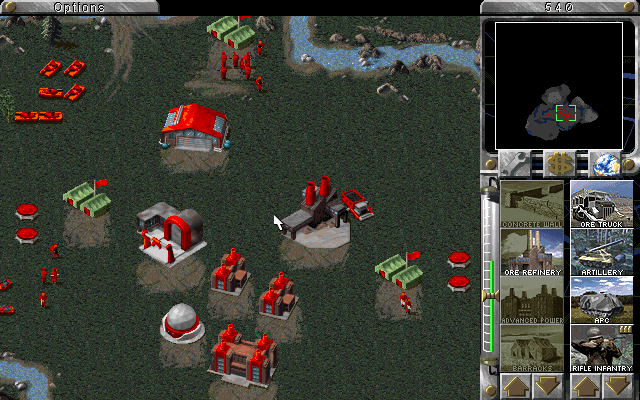
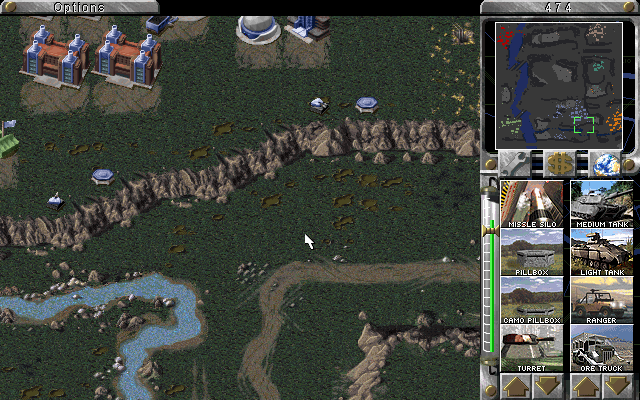
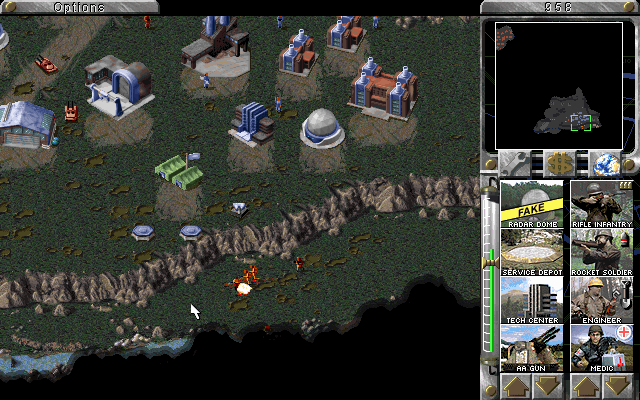
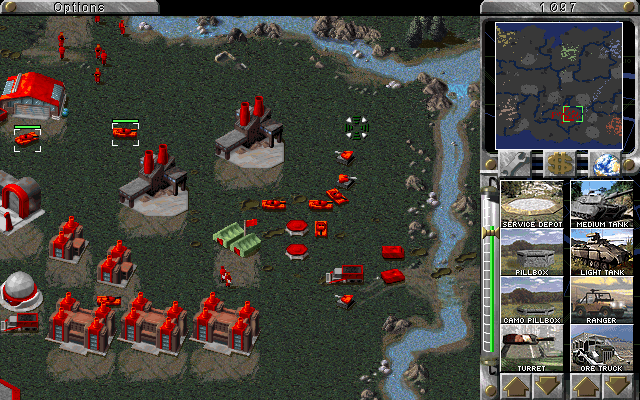
Another important factor is the order in which you build the structures in your base. You need to get building and training units as fast as you can, so here's a rough order. This can be modified - for example, against human players you may want to build a barracks before a refinery so you can get training some men in case of an early start to the proceedings. Some commanders also prefer an early Tesla Coil if playing as the Soviets, though I am not a big fan of putting defence before offence. If you face attack early on you definitely need to shift priority totally to tank production, and perhaps also get a service depot built quickly. Things like tech centres can wait until you are secure.
- Power Plant
- Ore Refinery
- War Factory
- Ore Refinery
- Power Plant
- War Factory
- Radar Dome
- Two Advanced Power Plants
- Two Barracks
- Tech Centre / Service Depot / Base Defences etc
You'll notice I have put "Two Barracks". A method I always use is the "barracks as a wall" system, which basically entails placing barracks around the outskirts of your base. This offers a few advantages. Firstly, when the enemy assault your base, they often target these buildings, so they act as a kind of barrier. Secondly, having them at key points in your base means you can select whichever one is nearest the attack and quickly train some ground troops, and thirdly the training process is twice as quick since you have more than one barracks. Should your base be under heavy attack and you are getting pushed further and further back, build a barracks directly in the path of the enemy to slow them down. Two war factories is always strictly necessary. Not only because one is a backup but because you'll get to build tanks twice as fast! Very important. You can even position one war factory behind the lines in the safety of the base, as long as one remains near the front for easy delivery of new vehicles.
You need at least two ore refineries, or three if ore is plentiful, and at least four ore trucks. Don't have too many trucks using one refinery as this will not be efficient. Your second ore truck should be the first unit you build with your War Factory, then you build another while your second refinery builds, or build a few tanks first. It's up to your judgement.
As you can see from this pic, the enemy target production facilities.
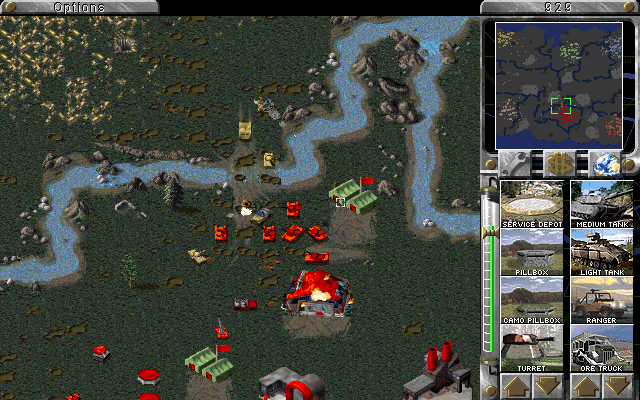
You should always have more power than you need. I'm still not sure if it's a myth or not that things build slightly quicker if you have (lots of) excess power, but even if it's not true backup power is always a good idea in case the enemy manages to take out a power plant.
Some buildings you can sell after building. The Soviet Tech Centre, once built, just uses power, so sell it, since you can still build all the units it enabled once it's gone. For the Allies, once your GPS satellite is complete, you can sell your radar dome if you are confident of your tech centre not being destroyed. This also saves you a fair amount of power.
Fake structures can actually be a good idea sometimes. They do actually work, since the enemy will target them instead (not sure why, maybe they go for the nearest one) of the proper structures. Fake Radar Domes are often the most useful ones, and like the multiple barracks trick, fake structures offer a cheap and large barrier to your base. Even it just slows the enemy up for five seconds, that's enough. Even better if they waste a V2 rocket on it.